Measuring for Desk Re-Tops and Resizing: What a Maker Needs
In this guide
To re-top or resize a desk you need six measurements: the frame's outer length and depth, the frame height, and the existing top's length, depth and thickness, plus the position and type of the fixings that hold the top on. Add photos of the underside and a note of any cable cut-outs, and a maker can draw a new top that fits first time.
REFRAME re-tops and resizes desks as part of its rework service for London offices, and the drawings start from exactly this information. This guide explains what to measure, why each number matters, and what happens after you send it. The step-by-step version is at the end.
Start with the frame, not the top
The frame is what stays, so the frame sets the rules. Measure the outer length and depth of the frame at the top rails — in two places each, because frames are not always square after years of moves — and the height from the floor to the top of the frame. Note whether the feet are adjustable and whether the frame rocks.
Then record the frame type:
- Fixed height. A fixed frame such as REFRAME's Recon has set widths (1,200, 1,400, 1,600 and 1,800 mm) and depths (600, 700 and 800 mm) with a finished desktop height of 740 mm (including the top). Measure the bare frame separately when specifying a replacement top; other fixed systems have their own set of sizes, and the new top has to respect the frame's span.
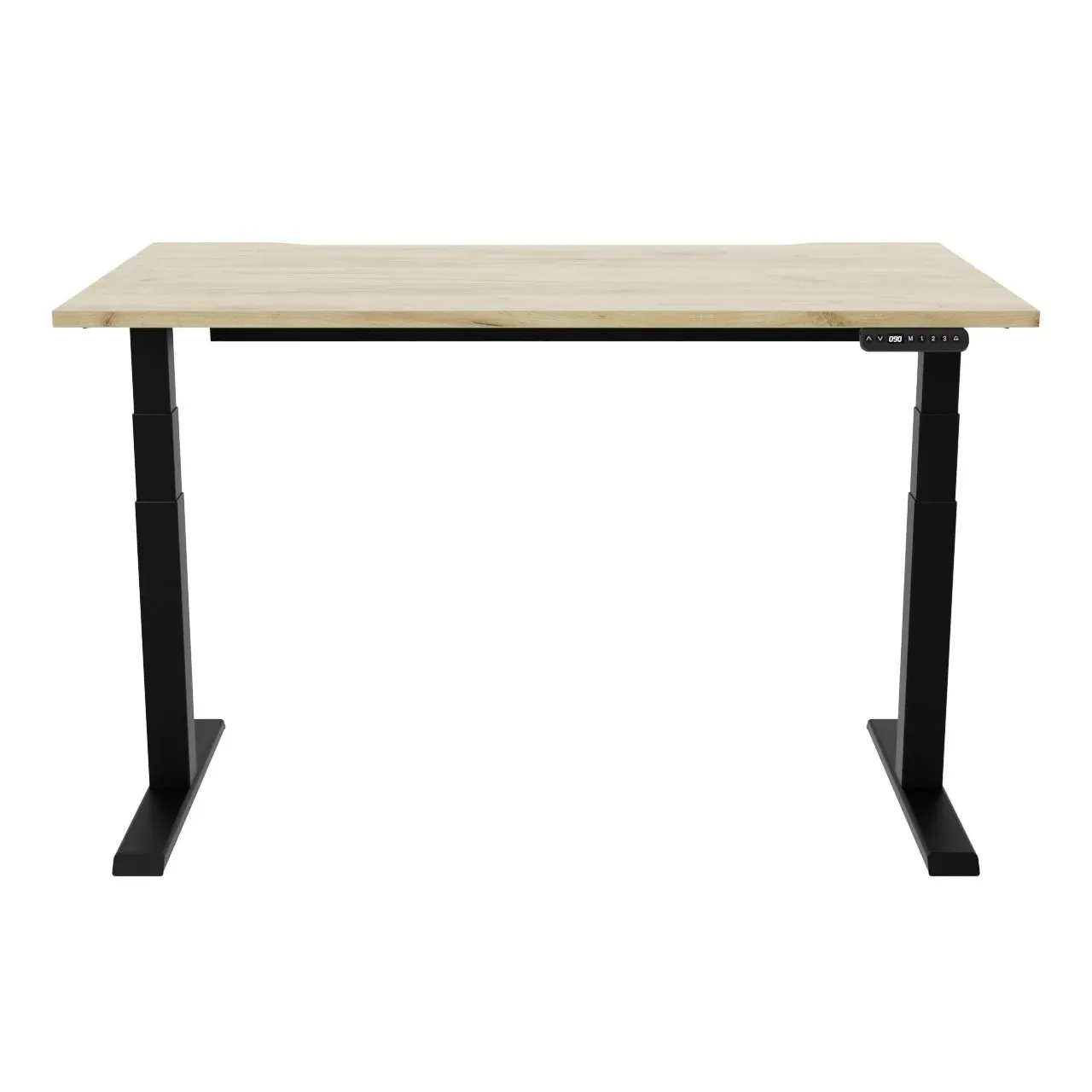
- Sit-stand. A telescopic beam, such as the 1,000–1,800 mm beam on R!se, can be widened or narrowed to suit a new top; a fixed-width sit-stand beam cannot. Note the load rating on the frame's label, because a heavier top counts against it.
- Bench or linked frames. Record how the frames join — shared legs, link kits, a continuous beam — because splitting or re-joining a bank changes what each top has to span.
Measure the existing top
Measure the top's length, depth and thickness at the edge, and how far it overhangs the frame on each side. Note the edge type — MFC tops usually carry an ABS edging — and the corner radius, so the new top matches anything you are keeping. A top that is thicker or heavier than the old one changes the fixings and, on a sit-stand frame, the load, so say if you want to change material.
If the plan is to cut the existing top down rather than replace it, note where the damage and the old cut-outs are: a top can only be cut down if the surviving area is clean and the edge can be re-applied.
Find and photograph the fixings
Turn a desk over or look underneath with a torch. Tops are typically held by:
- bushed metal inserts in the underside of the top, into which the frame bolts (Recon uses these);
- brackets or plates screwed up into the top;
- clips or clamps that grip the top's edge.
Photograph the fixings with a tape measure in shot and note the spacing between them. The new top is pre-drilled or fitted with inserts to match the frame, so it goes on without anyone drilling on site. If several desks are the same model, one clear set of photos covers them all.
Cable cut-outs, power and screen arms
New floor boxes rarely land where the old ones were, so this is the moment to sort cable management. Record:
- the position and size of existing grommets and cable cut-outs, and where the new ones should be;
- whether a cable tray clips to the frame (Recon's optional steel tray does) or fixes to the top;
- where screen arms clamp, because a clamp needs a clear, uncut edge and a top that will take the load;
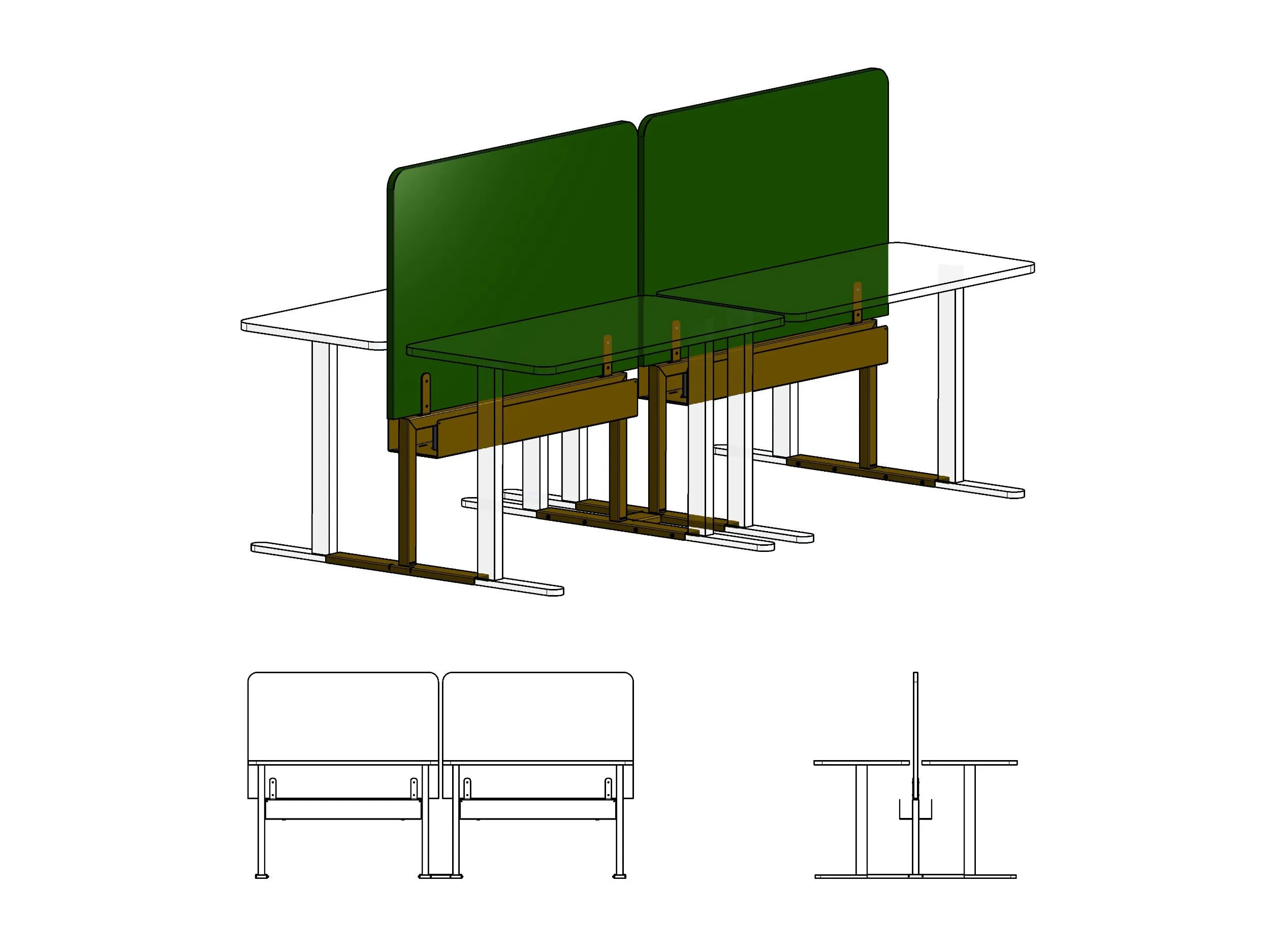
- modesty panels and umbilicals that attach to the top or the frame.
Grommets and trays are cheap relative to a new desk, and they are the difference between a reworked desk that looks new and one that trails cables.
Decide the new size
The new width and depth come from the floorplan, not the old desk. A denser plan may want 1,400 mm positions where the old office had 1,600 mm; a smaller floor may want single-sided runs instead of back-to-back. Options, in rough order of cost:
- Cut down and re-edge the existing top, where the material and edge allow.
- New top, same frame in the new size and finish.
- New top on a re-joined bank, where benches are being split or merged.
A telescopic sit-stand beam adjusts to the new width; a fixed frame sets a practical limit to how far a top can grow, and the drawing will tell you where that limit is.
What to send, and why it matters
Scroll across to compare all columns →
| What to send | Why it matters |
|---|---|
| Frame outer length and depth, two places each | Sets the span the top has to cover and shows if the frame is square |
| Frame height and feet | Confirms the finished desk height and whether the frame needs levelling |
| Top length, depth, thickness, overhang, edge | Matches the new top to what you keep and to the fixings |
| Fixing type, spacing and a photo with a tape | Lets the new top be pre-drilled to fit without site drilling |
| Cut-outs, trays, screen arms, new floor box positions | Puts grommets and cable management where they are actually needed |
| Frame type, load label, damage | Decides cut-down vs new top and what a sit-stand frame can carry |
| Quantity, new size and a finish reference | Turns the survey into a cut list and an itemised quote |
What happens next
REFRAME turns the measurements into drawings, confirms anything unclear with a site visit where the quantity justifies it, and sends an itemised quote covering design, manufacture and fitting. Tops are cut and edged by vetted UK partners off-site, typically 2–4 weeks from drawing sign-off, and fitted around your occupation or your move. Every drawing is archived, so the next resize starts from the file rather than from a tape measure. If a frame is not worth re-topping, the survey says so; the refurbishment guide explains how that judgement is made.
How to measure a desk frame for a new top
-
Measure the frame footprint
With the old top still on, measure the frame's outer length and depth at the top rails in two places each, and the height from floor to the top of the frame.
-
Measure the existing top
Length, depth and thickness at the edge, the overhang past the frame on each side, the edge type and corner radius.
-
Find and photograph the fixings
Look under the top for bushed inserts, brackets, screws or clips; photograph them with a tape measure in shot and note their spacing.
-
Record cut-outs and cable management
Position and size of grommets, cable trays, modesty panels and screen-arm clamps, and where the new floor boxes will be.
-
Note the frame type
Fixed height or sit-stand, whether the beam is telescopic, the adjustable feet, and any damage or wobble.
-
Decide the new size and finish
The width and depth the new plan needs, the material (MFC, veneer, Fenix or laminate) and an edge or colour reference.
-
Send it with photos
Two photos of the whole desk, one of the underside and one of any damage, with the measurements and quantity, are enough for a drawing and an itemised quote.
Frequently asked questions
Yes. REFRAME fits new tops to sound fixed and sit-stand frames, pre-drilled to match the frame's fixings, in MFC, veneer, Fenix or laminate. It is one of the most common reworks in a refurbishment or move and usually costs significantly less than replacing the desks.
Smaller is straightforward: tops can be cut down and re-edged, or replaced in the new size. Larger depends on the frame: a telescopic sit-stand beam widens to suit, while a fixed frame sets a practical limit to the overhang. REFRAME's drawing shows where that limit is for your frames.
No. Measure the frame at the top rails with the old top on, and photograph the fixings from underneath. REFRAME confirms anything unclear at a site visit where the quantity justifies one; for a floor of matching desks, one clear set of photos covers them all.
Yes, if the mechanism works. Note the frame's load rating and whether the beam is telescopic, because a heavier or wider top counts against the frame. REFRAME's R!se, for example, has a 1,000–1,800 mm telescopic beam and a load capacity of up to around 120 kg; a heavier top uses part of that.
Match the existing thickness unless the fixings or the frame's load rating call for a change; MFC with an ABS edge is the usual choice for office desks. REFRAME specifies the thickness on the drawing so the inserts, screen-arm clamps and cable trays all fit the new top.