Remanufactured Office Furniture: What It Is, and When to Choose It Over New
In this guide
Remanufactured office furniture is existing furniture that has been professionally re-engineered — new tops, resized frames, fresh finishes, replaced hardware — so it performs and looks like new, usually for significantly less than buying new.
The terms get used loosely, and that costs buyers money. "Second-hand" often means sold-as-seen with someone else's wear. "Refurbished" can mean anything from a wipe-down to a respray. Remanufacturing is different: the piece goes back through a design process — measured, drawn, re-engineered — and comes out matched to your space and your scheme, not the previous owner's. This guide untangles the terms, sets out the scope and trade-offs, and shows you how to judge whether the furniture you already own is a candidate.
Remanufactured vs refurbished vs second-hand vs new
Scroll across to compare all columns →
| Second-hand | Refurbished | Remanufactured | New | |
|---|---|---|---|---|
| What you get | Sold as seen | Cleaned, minor repairs, maybe resprayed | Re-engineered: new tops, resized frames, new hardware and finishes | Factory fresh |
| Fits your space | As it comes | As it comes | Made to your floorplan and scheme | If the catalogue size suits |
| Cost comparison | Check condition, delivery and fitting | Check the repair scope as well as the price | Compare an itemised rework quote with a like-for-like replacement | Include delivery, fitting and disposal of existing furniture |
| Embodied carbon | Already spent | Already spent | Mostly already spent — small additions | A full new footprint |
| Warranty | Ask for written terms | Ask which repairs and components are covered | Ask for cover on new components and the work, including exclusions | Check the manufacturer’s written terms |
| Consistency across a floor | Pot luck | Limited | Uniform finish across the whole run | Uniform |
Descriptions vary between suppliers. Ask specifically what was replaced, what was refinished, and what is covered by the written warranty. Compare the condition and scope of work before comparing prices.
What remanufacturing actually involves
At REFRAME, remanufacturing is the same process as a bespoke commission — it just starts from your existing furniture instead of a blank sheet:
- Survey and audit. We look at what you own: frame condition, sizes, quantities, what the new floorplan needs. Sound steel frames are the usual heroes — they outlast their tops by a decade or more.
- Design and drawings. New tops cut to the new plan (including awkward corners and columns), finishes matched to the new scheme, and any new parts — brackets, cable trays, link kits — drawn in-house.
- Manufacture and finish. New components are made by our vetted UK partner network: tops in MFC, veneer, Fenix or laminate; steel re-powder-coated in any RAL colour.
- Fit and install. Reworked pieces come back matched, consistent, and warrantied — a floor of furniture that reads as one decision, not a patchwork.
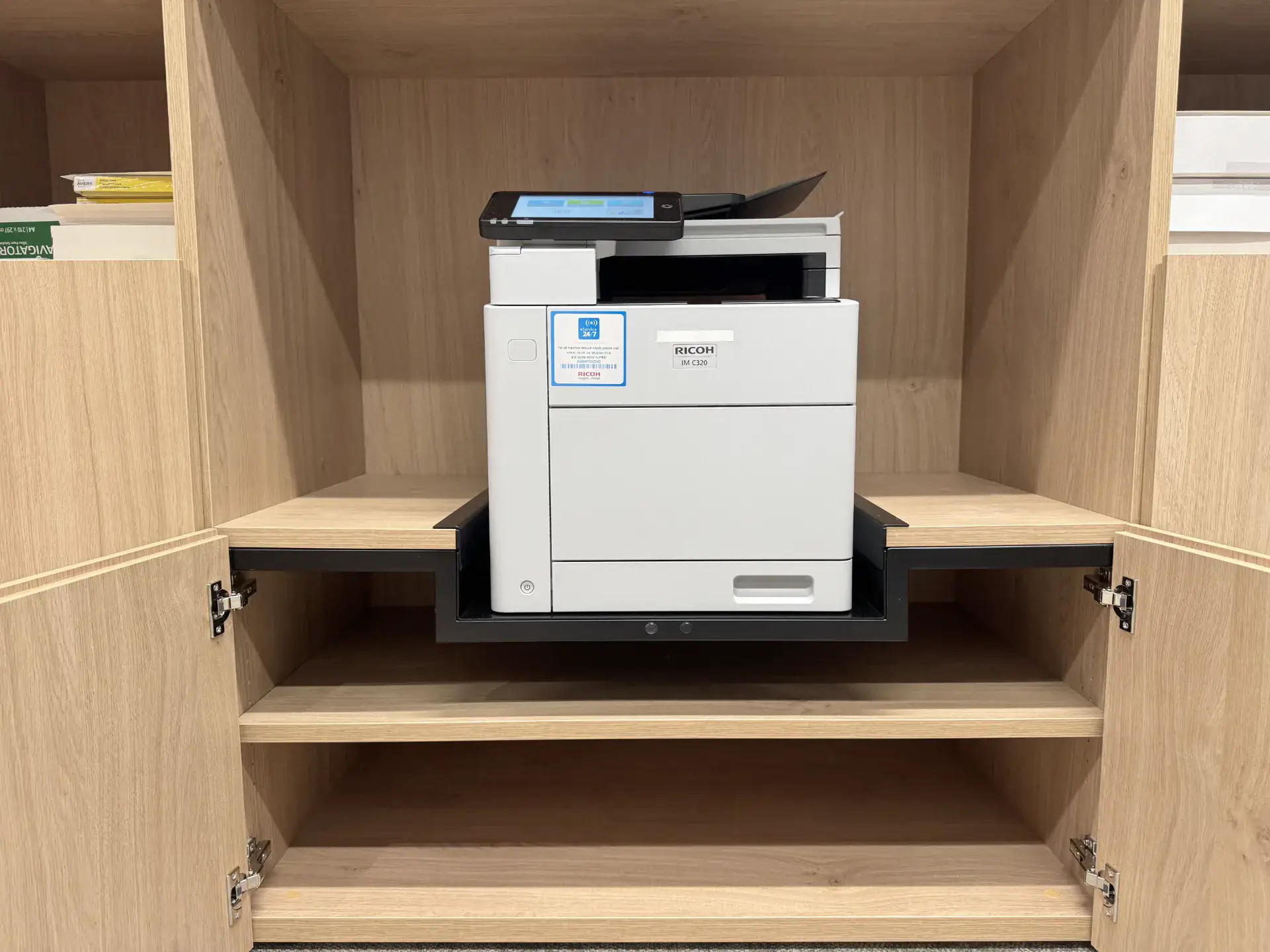
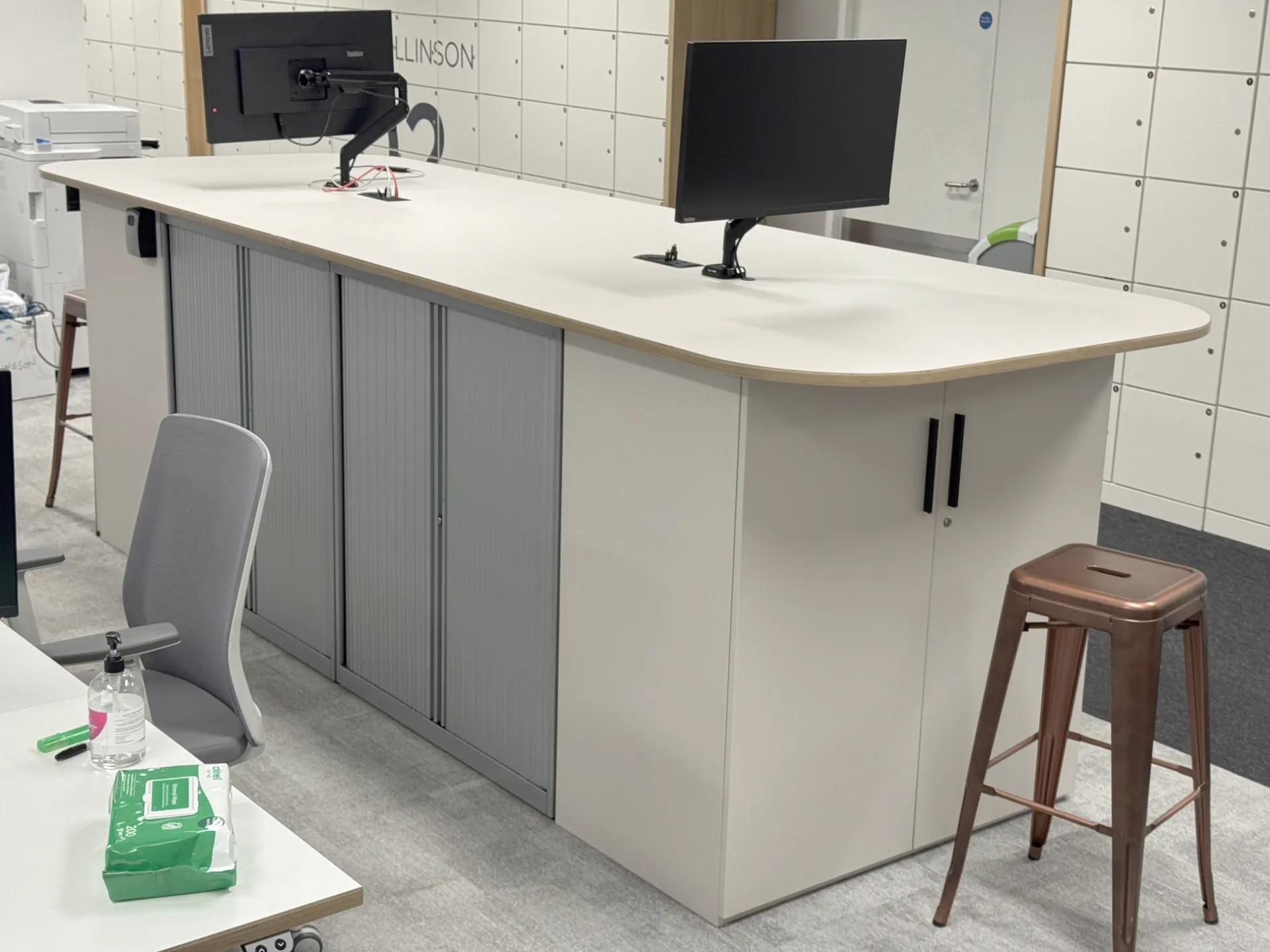
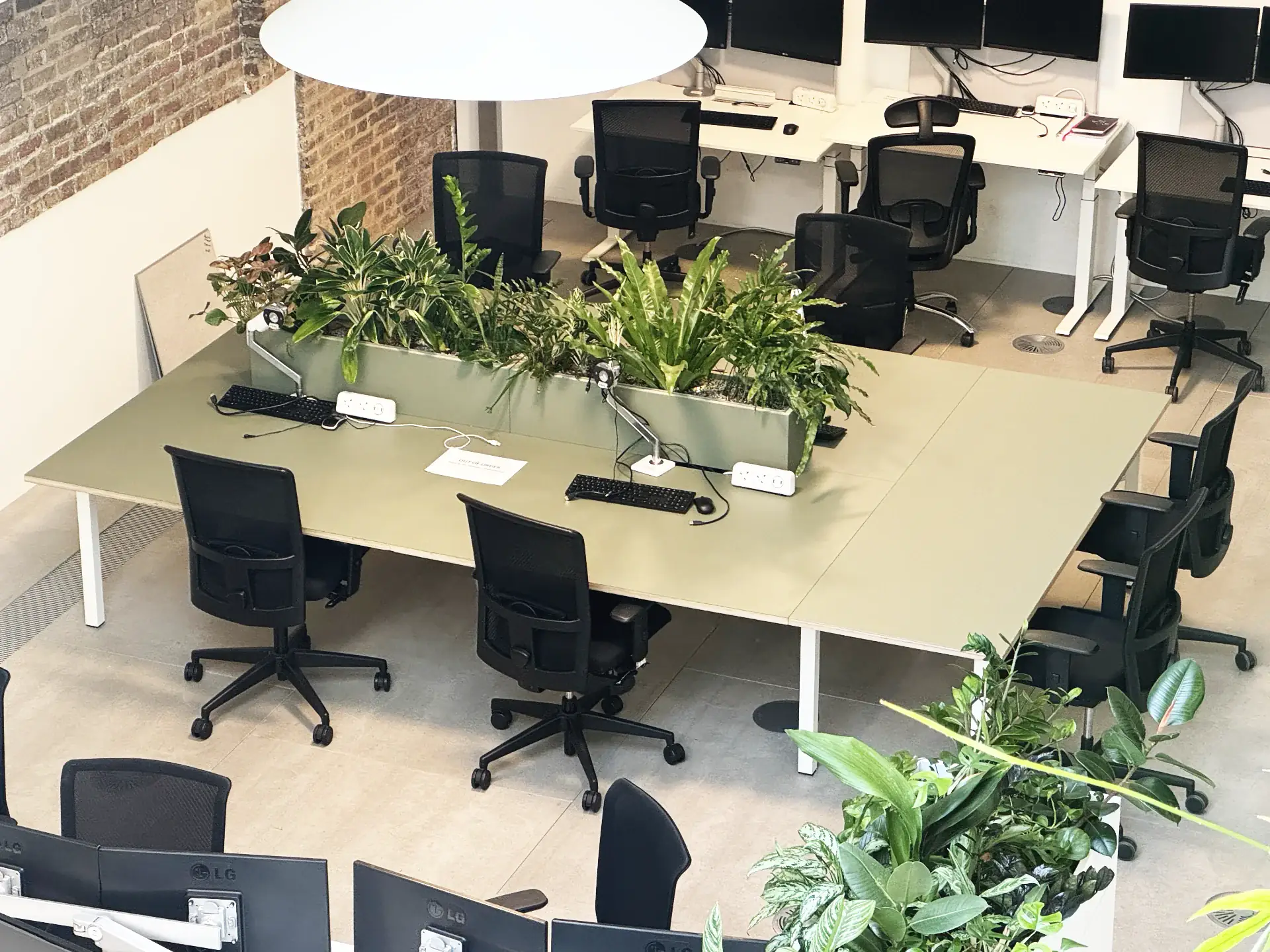
Real examples from recent projects: desks resized for a smaller floorplate with new tops in the client's new finish; a breakout table built from reclaimed flooring on an existing desk frame; locker banks re-faced with shroud kits instead of being skipped; an IT tech bench remanufactured from existing tambour units, pre-drilled for equipment and power.
When remanufacturing is the right call
- The frames are sound but the look is dated. Steel desk frames rarely wear out. Tops, edges and finishes do.
- You're moving or resizing. Desks that don't fit the new floorplan can usually be resized rather than replaced — see our office move guide.
- Sustainability targets are real. Reuse keeps the embodied carbon you've already paid for working. If your business reports on waste or Scope 3, remanufacture is one of the few line items that's both greener and cheaper.
- You need consistency, not perfection. Remanufactured runs come back uniform — a key advantage over topping up with second-hand pieces that never quite match.
When it isn't
Not every piece is suitable for remanufacture. Water-damaged chipboard, failed welds and obsolete mechanisms need a condition and repair assessment before a rework is specified. Seating needs a separate assessment of its mechanisms, upholstery, safety and repair costs. Compare the proposed repair with replacement before deciding; we’ll explain the options at the survey stage.
Frequently asked questions
Usually, and often significantly — you're paying for new tops, finishes and labour rather than whole new pieces. The exact saving depends on quantities and specification, which is why we quote from a survey rather than a price list.
Typical reworks run 2–4 weeks from drawing sign-off. Tops can often be cut and edged off-site while the office keeps working, with final fitting timed around your move or refurb.
Yes — the new components and the work are covered by a commercial warranty, and because every drawing is archived, pieces can be repaired, resized or extended years later.
Yes. Because finishes are specified from the same ranges we use for new bespoke work (MFC, veneer, Fenix, any RAL powder coat), a mixed floor of reworked and new pieces can be finished to read as one range.
No — we're a design studio, not a dealer. We remanufacture the furniture you already own, or design and make new pieces when that's genuinely the better answer.