Reusing Office Desks After Downsizing: Resize, Convert, Recycle
In this guide
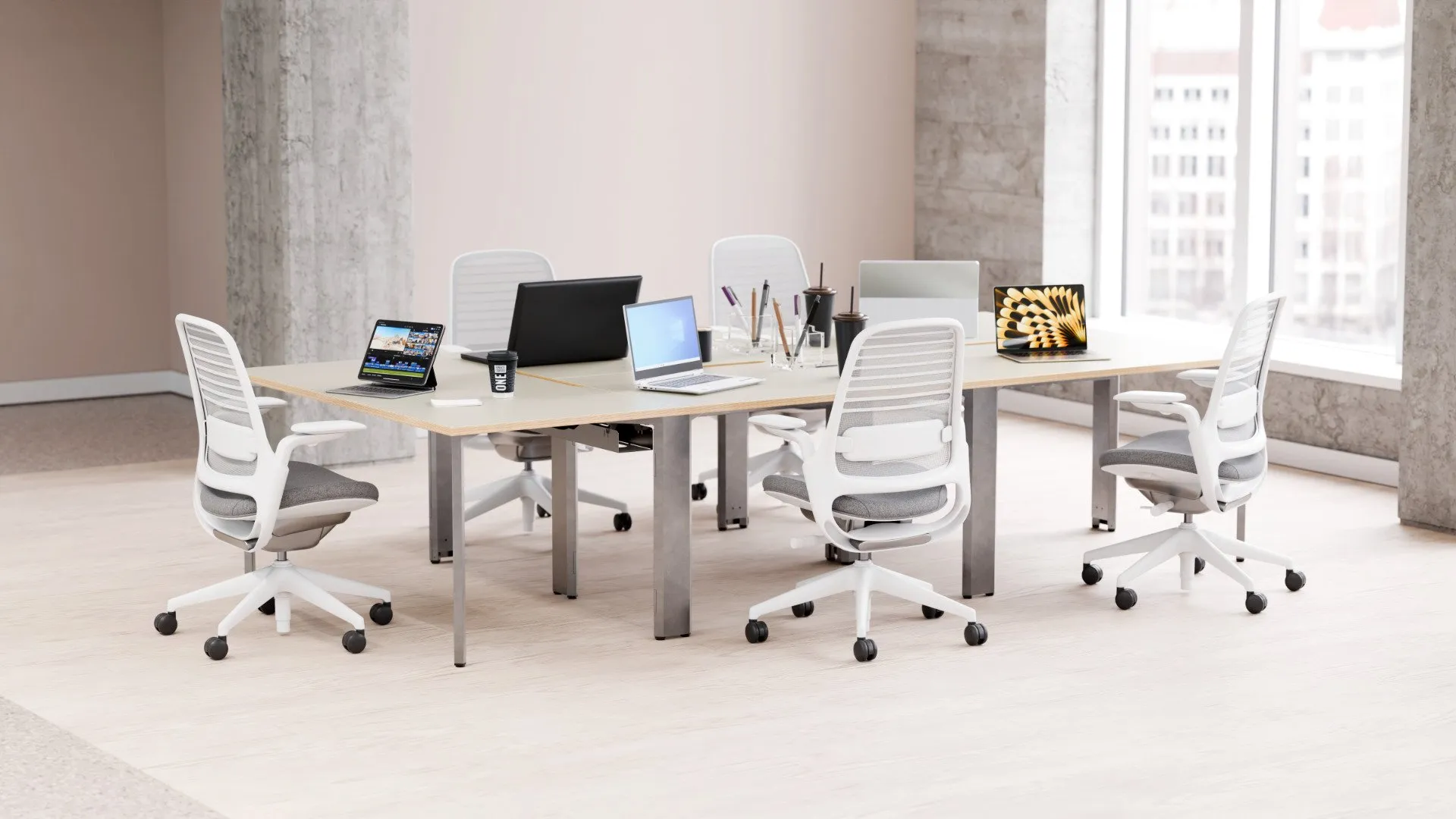
When an office downsizes, the desks that no longer fit are rarely worn out; they are the wrong size, the wrong configuration or simply surplus. The cheapest, least wasteful answer is usually to keep the sound frames, resize or reconfigure the ones you need, convert some of the rest into breakout and meeting tables, and recycle only what genuinely cannot be reused.
REFRAME reworks desks for London offices that are moving to a smaller floor or fewer fixed positions. This guide is the sequence we follow, from the audit to the skip that ends up smaller than expected.
Why downsizing leaves you with the wrong desks, not bad ones
A smaller floorplate or a shift to hybrid working changes almost everything about how desks sit, while leaving the desks themselves intact:
- Fewer fixed positions. Benches of six that should now be threes, or back-to-back runs that should be single-sided against a wall.
- A denser plan. Positions at 1,400 mm where the old office ran 1,600 mm, so the tops are the wrong length even though the frames are fine.
- New zones. Space that was desking is now breakout, meeting or focus space, and needs tables, not workstations.
- Different power and data. Floor boxes land in new places, so cable routes, trays and desk orientation change.
None of that makes a steel desk frame obsolete. Frames outlast their tops by years; what needs to change is the top, the way banks are joined, and the cable management.
Step 1: audit before you decide anything
Walk the floor and log every desk: type, frame condition, top condition, real dimensions (measure, do not trust the original order), and whether the frame is fixed height or sit-stand. Photograph a typical bank and anything damaged. Then sort each desk into one of four piles:
- Keep as-is — fits the new plan without change.
- Rework — sound frame, wrong size or tired top.
- Convert — sound frame, no seat needed; a candidate for a breakout or meeting table.
- Recycle or rehome — bent, corroded or obsolete.
Most companies are surprised by how small the last pile is. The office move guide has the full audit checklist and how to map desks onto the new floorplan.
Step 2: resize and reconfigure the desks you keep
The rework pile is the bulk of the work and the bulk of the saving:
- Cut tops down to the new position width and re-edge them, or fit new tops on the same frames where the finish is changing anyway.
- Split and re-join banks — a six into two threes, back-to-back into single-sided — using the frames' existing link points or new link kits drawn for them.
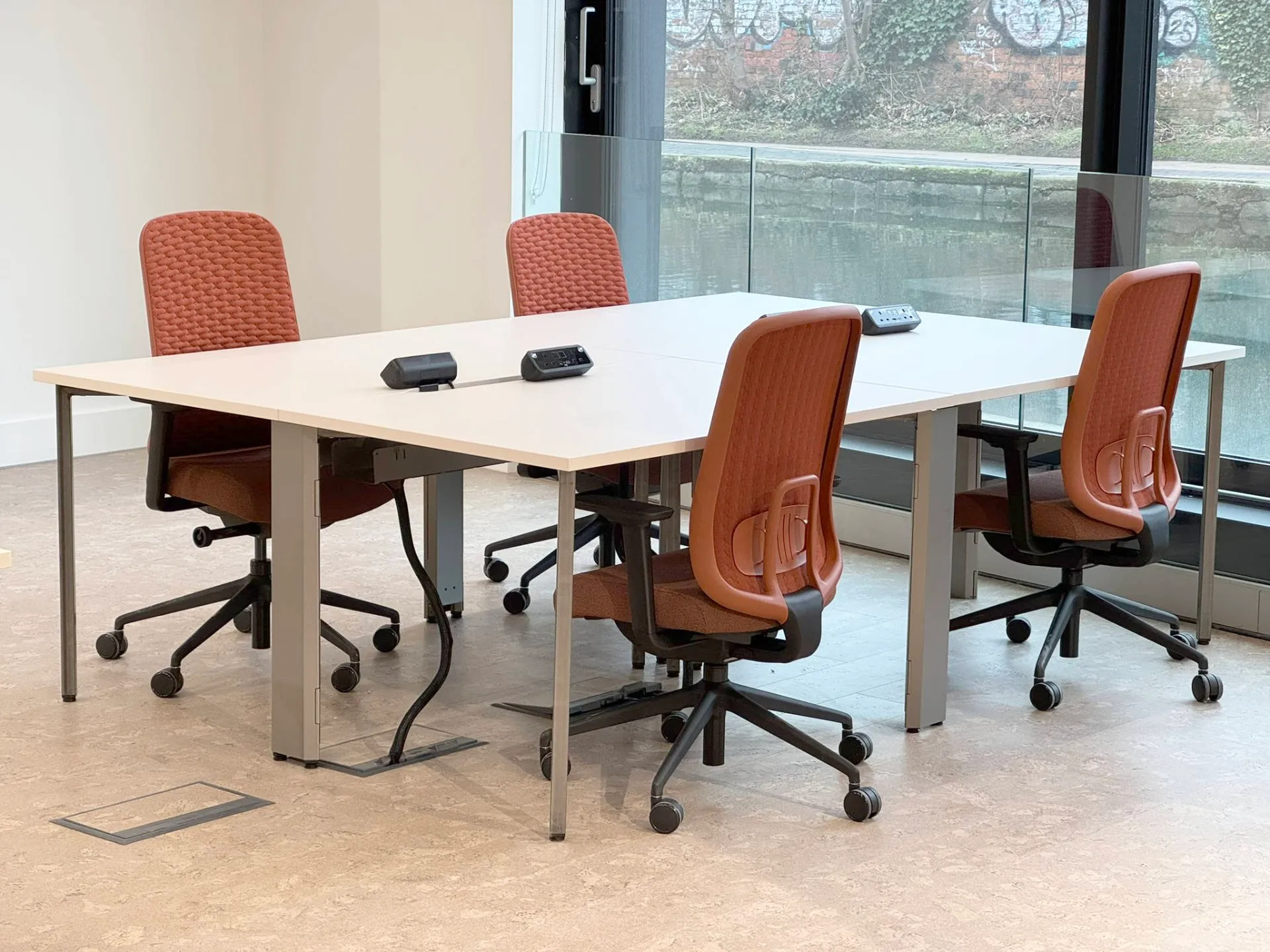
- Add cable management for the new floor boxes: trays, grommets, umbilicals and modesty panels.
- Unify the finish: powder-coat mixed legacy frames to one RAL colour and specify tops that read as one range.
Tops can be cut and edged off-site while the old office keeps working, then fitted as part of the move.
Step 3: turn surplus frames into what the smaller office needs
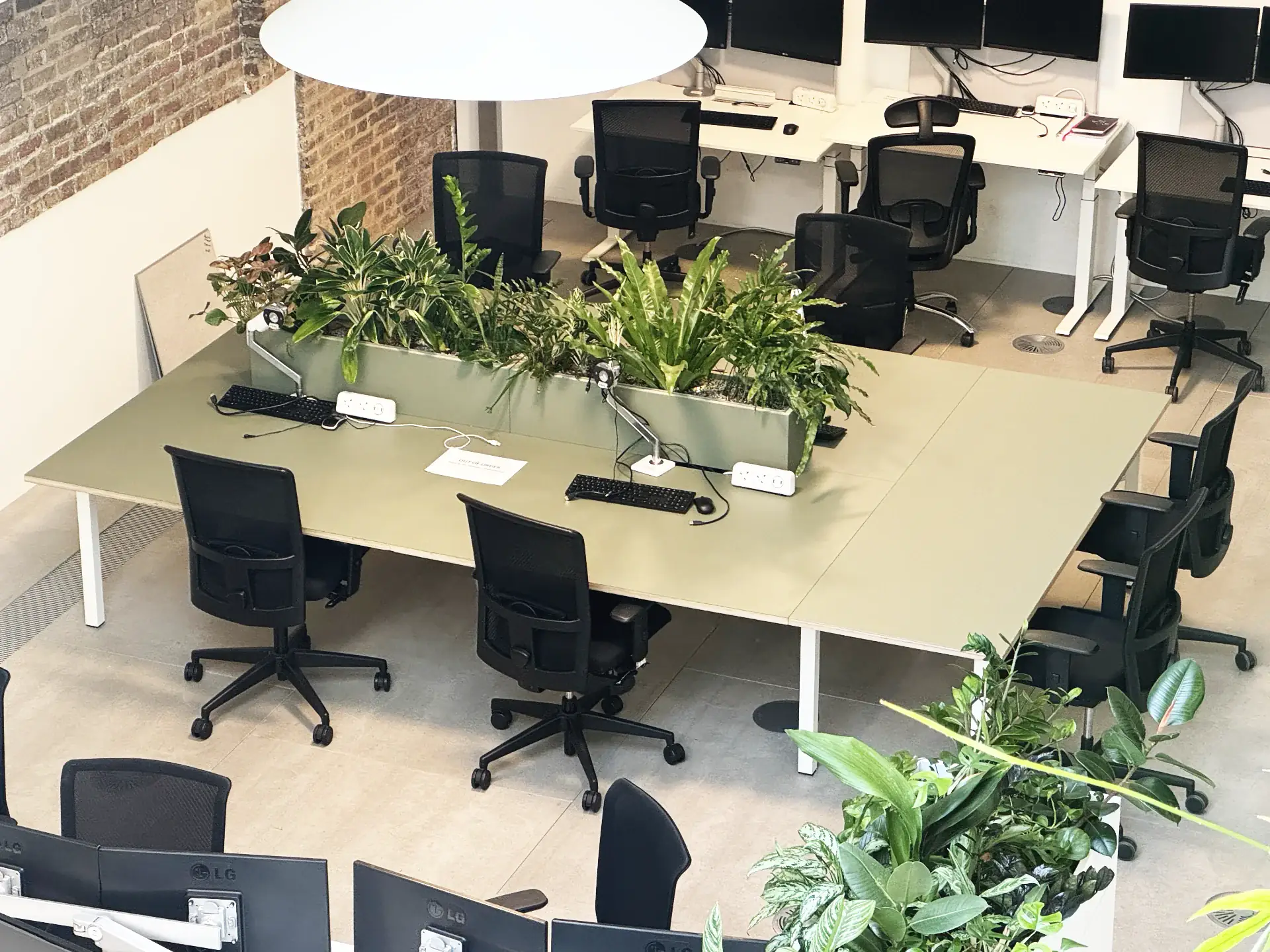
A downsized office usually needs more collaboration space, not fewer pieces of furniture. Surplus desk frames are a head start on that. On a recent REFRAME project, a breakout table was built on existing desk frames with a new Forbo top and an integrated planter, at lower cost than buying new. The same logic gives you:
- Breakout and meeting tables from paired frames with a new, larger top.
- Poseur tables from frames re-topped at standing height.
- Tech benches and project tables — one client's IT bench was built from existing tambour units with new cupboards pre-drilled for equipment and power.
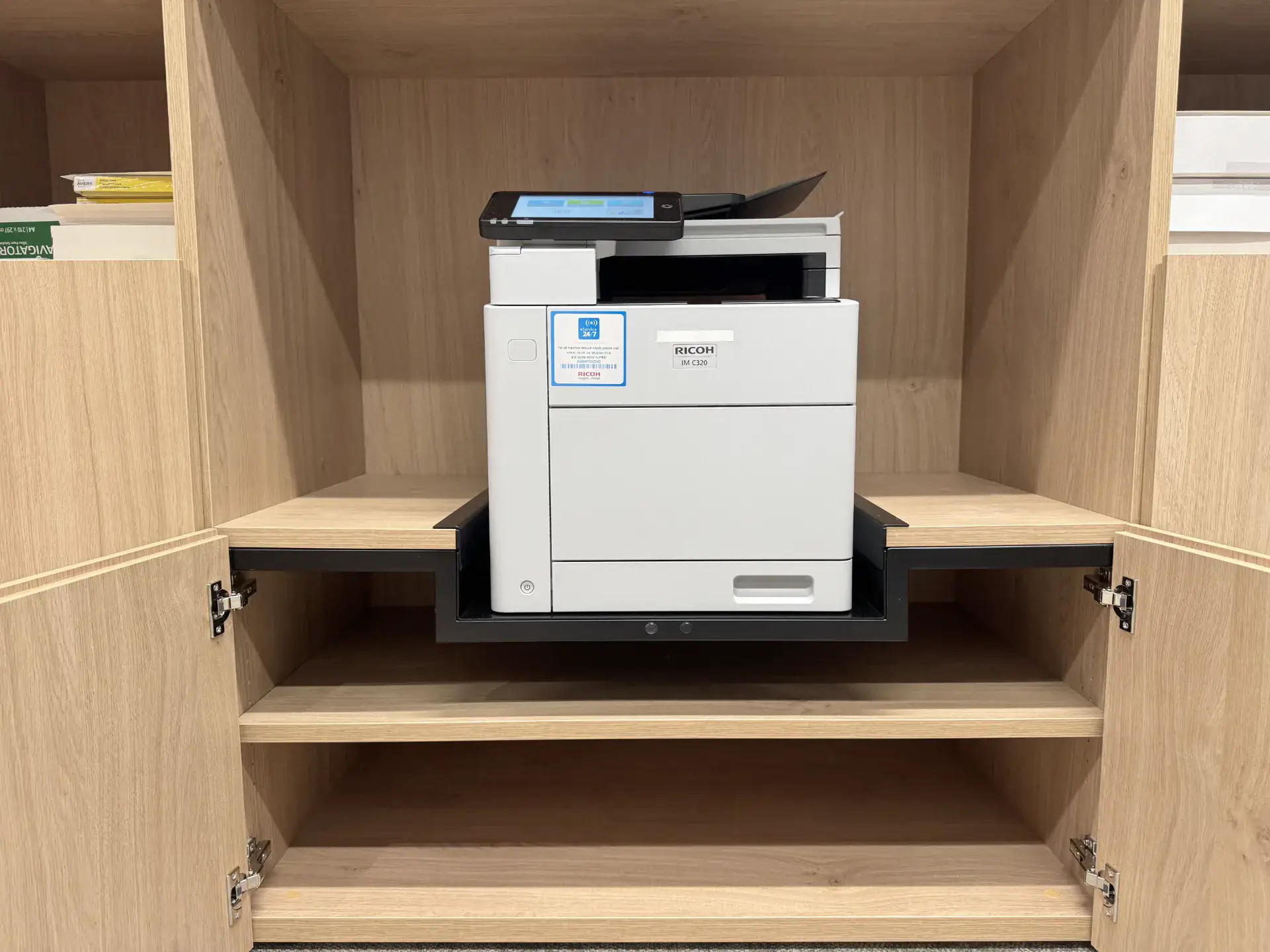
- Storage adapted to a new job, such as a cabinet fitted out to house a printer.
Ask what a frame could become before it goes on the recycling pile. The breakout tables guide covers sizes, heights and power for these conversions.
Step 4: fill the gaps with modular desking, not a new floor of furniture
If the new plan needs a few positions the reworked stock cannot provide, add a modular system rather than replacing everything to get a match. Recon clips together tool-free in widths from 1,200 mm to 1,800 mm and reconfigures again next time; R!se covers sit-stand positions. Both can be finished to sit alongside reworked frames — frames powder-coated to the same RAL, tops from the same MFC range — so a mixed floor reads as one decision.
Step 5: recycle or rehome what is left
For the genuinely surplus pieces, agree the clearance early. Separate steel, timber and board so each stream is actually recycled; offer serviceable pieces for rehoming; and keep a small buffer of reworked positions for snagging and late headcount changes. REFRAME does not buy or sell second-hand furniture — we are a design studio, not a dealer — but we will tell you which pieces are worth rehoming and which are not.
What to do with each type of surplus desk
Scroll across to compare all columns →
| What you have | Best route | Why |
|---|---|---|
| Sound frame, top the wrong length | Resize or re-top on the same frame | The frame is the expensive part; the top is the cheap one |
| Sound frame, tired or damaged top | Re-top in the new finish | An effectively new desk for the cost of a top |
| Bench of six, plan needs threes | Split and re-join with link kits | Same frames, new configuration |
| Sound frames, no seats needed | Convert to breakout, meeting or poseur table | Fills the new collaboration zones without buying tables |
| Sit-stand frame, working mechanism | Re-top; check load rating with the new top | Mechanisms outlast tops too |
| Bent, corroded or obsolete | Recycle by material, or rehome | Reworking a failed frame costs more than it is worth |
Cost and timing
Reworking desks for a smaller office usually costs significantly less than buying new, because you pay for tops, link kits, finishing and fitting rather than whole products and the disposal of the old ones. Typical reworks run 2–4 weeks from drawing sign-off; brief the work as soon as the new plan is confirmed so production lands before the move. There is no minimum order, and the quote is itemised. The rework cost vs new guide shows where the money goes in each route.
Frequently asked questions
Audit them first, then sort each into keep, rework, convert or recycle. REFRAME resizes and reconfigures the desks a smaller plan needs, converts surplus frames into breakout and meeting tables, and separates the genuinely unusable pieces for recycling. Most companies keep far more than they expected.
Often, yes. REFRAME has built a breakout table on a client's existing desk frames with a new Forbo top and an integrated planter, at lower cost than buying new. Paired frames take a larger top; a frame re-topped at standing height becomes a poseur table. The structure already exists, so it is usually quicker and cheaper than making new.
If the frames are sound, usually yes. Cutting tops down or fitting new tops on existing frames costs significantly less than replacing the desks, and the reworked run comes back uniform in the new finish. Bent or corroded frames are the exception; REFRAME says so at the survey.
Typical reworks run two to four weeks from drawing sign-off with REFRAME. Tops can be cut and edged off-site while the old office keeps working, with fitting timed to the move, so brief the work as soon as the new floorplan is confirmed.
No. REFRAME is a design studio, not a dealer, so we do not buy or sell second-hand furniture. We rework the desks you keep, convert the surplus frames you want to use, and advise on rehoming or recycling the rest.